
Have you ever wondered why your marketing agency recommends including more than one type of media for every campaign?
There are solid reasons for this. The simplest reason for a multi-channel advertising campaign is your target audience does not consume media in just one place, and no single advertising channel can effectively reach every potential customer. A campaign combining television, social media, digital advertising, radio, print, and other relevant channels can create more opportunities for a brand to be seen, remembered, and acted upon.
Of course, you can’t count on the campaign being success based on advertising everywhere. It’s not that simple. You must be strategic when creating a plan. It's about reaching the right people, with the right message, at the right frequency, and through the right combination of channels- all while allocating the budget wisely.
Benefits of Running a Multi-Channel Campaign
Broader reach and greater audience penetration -- Different people use different media. Some watch local television, some scroll through social media, and others listen to the radio during their commute. Using multiple channels creates more opportunities to connect with a diverse audience, including people who may not encounter a single-channel campaign at all.
Increased frequency and brand recognition -- Marketing effectiveness depends on repeated exposure. A customer might see a television commercial, encounter the brand on Facebook, and later notice a digital ad while browsing a website. These additional encounters reinforce recognition and help a brand remain top-of-mind when purchasing later. It makes a difference to create meaningful opportunities for the audience to remember the brand.
Stronger messaging through reinforcement -- Each channel can support the primary message in a different way. Television can tell the story, social media can encourage interaction, and a website can provide product details and/or help customers take the next step. When the messaging is consistent, the channels reinforce one another.
More opportunities to reach customers at different stages -- A prospective customer may first learn about a business through television, research it online, and later see a social media promotion before making a purchase. Multi-channel campaigns support this journey, from initial awareness through consideration and conversion.
Greater flexibility and more measurable insights -- Digital channels provide detailed information about impressions, clicks, engagement, and conversions. Traditional media can contribute reach, awareness, and geographic coverage. Together, this data is valuable in identifying which combinations are contributing to results and adjust spending accordingly. Multi-channel marketing offers advantages, but it also introduces complexity. The key is to put together a smart campaign based on clear objectives. Simply adding channels isn’t a guarantee for a successful campaign. A focused campaign using three well-chosen channels can outperform one using seven poorly coordinated channels.
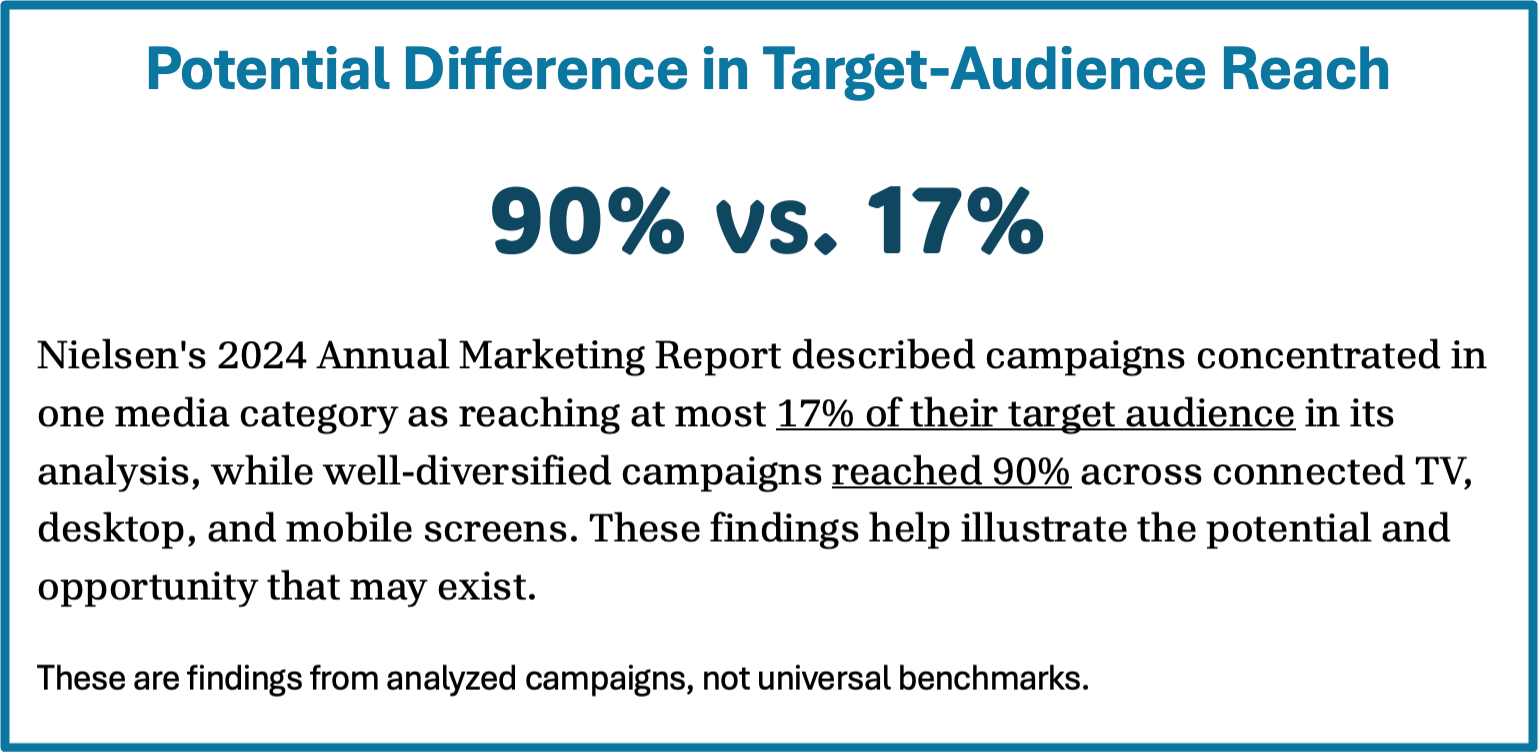
The point is that a thoughtful mix of media can expand reach and improve the chance that the advertising will produce a meaningful response.
Comparing channel performance helps identify which investments are reaching new people, reinforcing awareness, or generating leads or sales. Over time, this can improve budget allocation and reduce wasted spending.
Allocating budget strategically is important too. The multi-channel plan should take into consideration the expected impact of each channel. An agency with experience will make recommendations to maximize the results and outcomes. The budget should reflect each channel's role in reaching the target audience and achieving the campaign objectives.
It’s never a bad idea to test creative and refine targeting throughout the campaign. The appropriate budget allocation can vary considerably. A campaign targeting a younger, digitally engaged audience may invest more heavily in digital media, while a regional campaign seeking broad household awareness may need substantial television or other mass-reach media.
Important Guidelines to Keep in Mind
1. Fund each channel adequately. Avoid spreading budget dollars so thinly that no channel can deliver meaningful exposure.
2. Prioritize incremental reach. Favor channels that introduce the campaign to new members of the target audience.
3. Match the channel to the objective. Awareness, website traffic, lead generation, and sales require different strategies.
4. Measure and adjust. Shift spending when evidence shows that a channel is underperforming or delivering especially valuable results.
Where possible, marketers should compare results against a baseline, use campaign tracking, and test different approaches. Cross-channel measurement can help identify which media contribute incremental reach and which combinations deliver the strongest results. The real benefit of multi-channel advertising is not simply that the audience sees an advertisement in more places. It is that each channel can contribute a different strength to a coordinated strategy.
Television may establish awareness, digital advertising may reinforce the message, search may capture active interest, and a website may convert that interest into a customer. When these elements are planned together, the campaign can create a more consistent and effective path from awareness to action. It sounds like common sense. But it does take intentional planning to implement a strong and effective multi-channel campaign.
Ultimately, the goal is to maximize meaningful reach and frequency, while making every dollar work as efficiently as possible. Multi-channel campaigns matter when it comes to results. At Lewis we approach every campaign with client information and goals in mind to recommend and implement multi-channel plans with results. Let’s talk today to see how we can assist you with your next campaign.